LAND STUDY / Working access
A farm is also a set of journeys
Follow the route from public road to field, yard and storage. Access becomes clearer when every journey has a purpose.
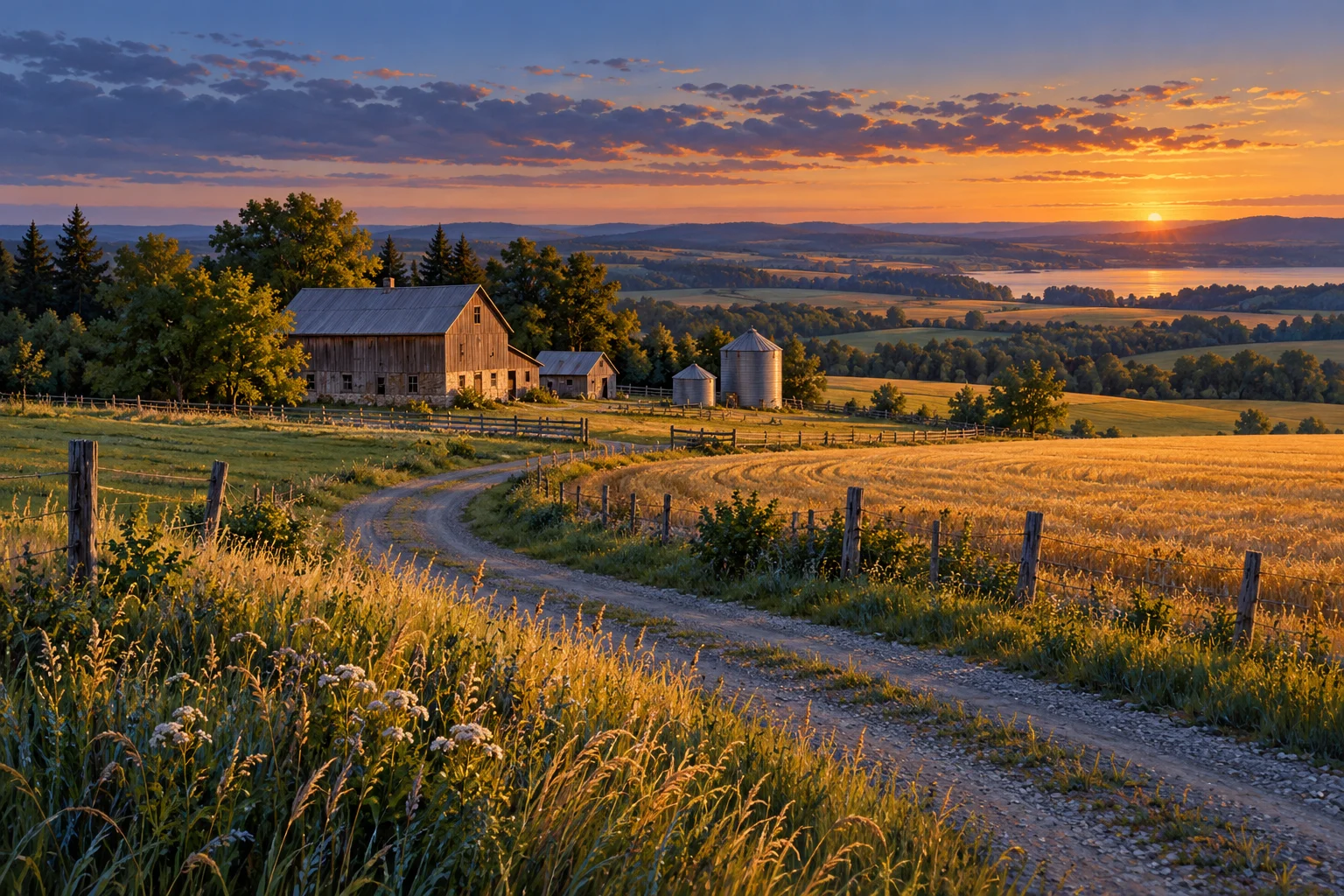
Describe the journeys first
An entrance can look generous in a photograph and still leave the important questions unanswered. What needs to pass through it? Where does that movement begin and end? Does the route work only for the vehicle used on a viewing day, or for the equipment and deliveries involved in the proposed operation? Start with the journeys. The dimensions and documents will then have a job to do.
Draw three working trips
Choose three ordinary movements: a machine travelling between fields, a delivery reaching the yard and a service vehicle reaching a building or water installation. These are planning examples, not a test of a particular property. Trace each route on a sketch. Add entrances, gates, tight turns, crossings and places where vehicles might need to wait or turn around.
Keep external and internal access separate. Reaching the property from a public road is one question. Moving between its working areas is another. A convenient line on an aerial image can be a starting hypothesis; establish what is physically present and what the records say before relying on it.
Ask about the vehicle before the width
“Accessible” is an incomplete description without an intended movement. Record the equipment or delivery requirement the operator has in mind, then ask for appropriate measurements and review. Look for documentary information about gates, overhead features, bridges or culverts rather than making a capacity claim from their appearance.
Public-road travel has its own requirements. Ontario's farm-equipment guide covers matters including vehicle dimensions, loads, lighting, braking and other road-use obligations. It is a provincial reference, and a reminder to check the rules that apply where the journey actually occurs.
Give seasons a route of their own
Ask the current operator to describe how each journey changes through the year. Which trips are routine? Which are timed around conditions? Where are snow clearing, surface maintenance or temporary restrictions recorded? Attribute these answers and seek dated supporting information where available.
The purpose is to make operational knowledge transferable. A note such as “ask about spring delivery route” creates a useful next step. A sweeping claim that a property has year-round heavy access can conceal several unanswered questions inside a reassuring phrase.
Keep the approach in the document file
An existing entrance is also a prompt to check the relevant approvals and responsibilities. Alberta's highway access guidance explains that installing, altering or removing access to a provincial highway, and changes in its use, require a permit. Local-road and other provincial situations need their own checks with the responsible authority.
Finish with a route register: journey, intended vehicle, observed constraint, document needed and person to ask. The result is more persuasive than a broad access adjective. It shows how work would move across the land, and exactly what still needs to be established.
Take these questions with you
- Which three ordinary working journeys must the access serve?
- What vehicle and delivery requirements need appropriate measurements or review?
- Which conditions change the route through the year?
- What documents and approvals establish the position of each approach?
Open the private comparison worksheet →
Keep exploring
Take the field journal with you →
Sources and further reading
An original editorial explainer with representative illustrations. No particular parcel is offered or assessed.