One landscape. Many ways in.
Choose a detail and follow it into the journal. This is a way of looking, rather than a map of a particular property.
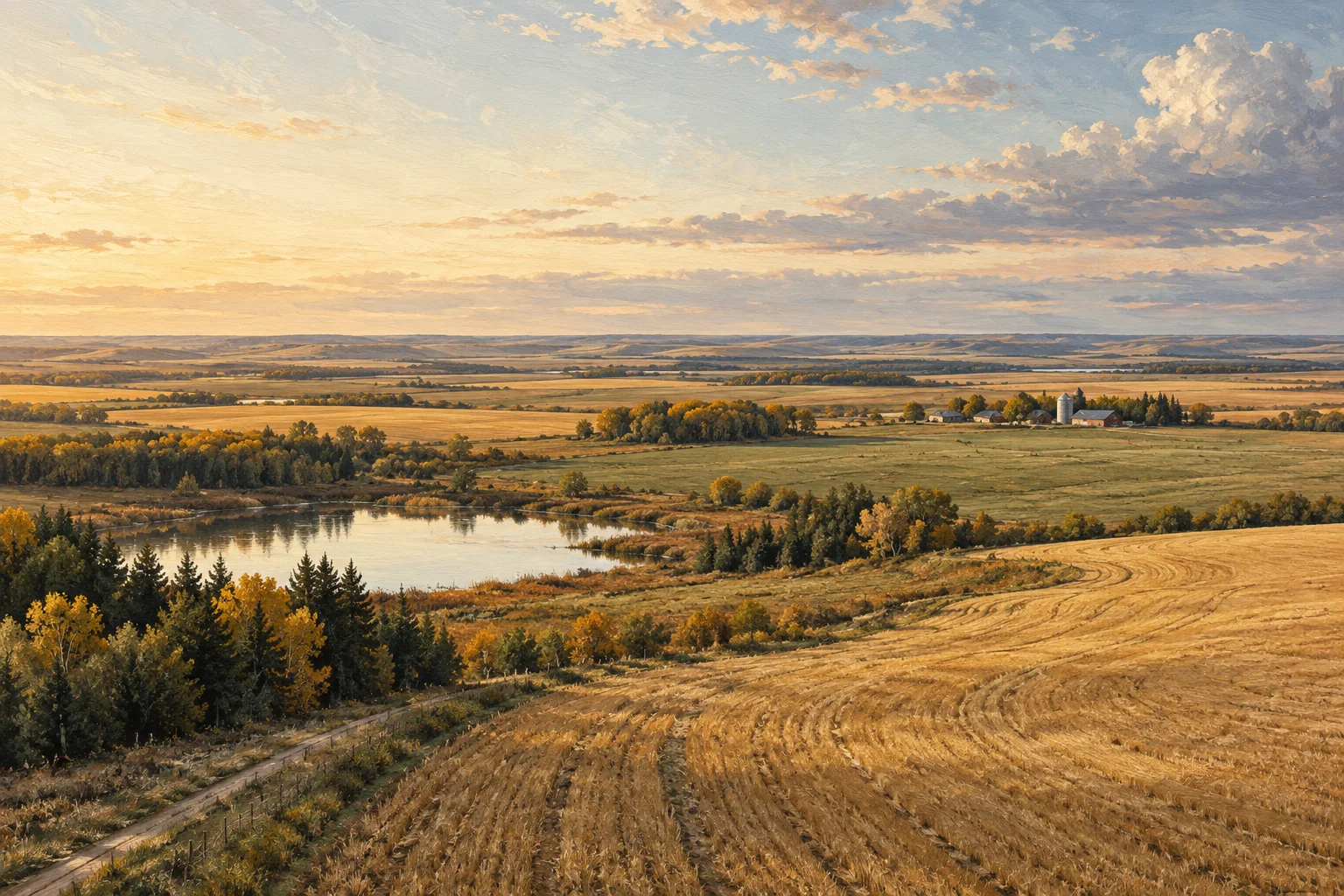
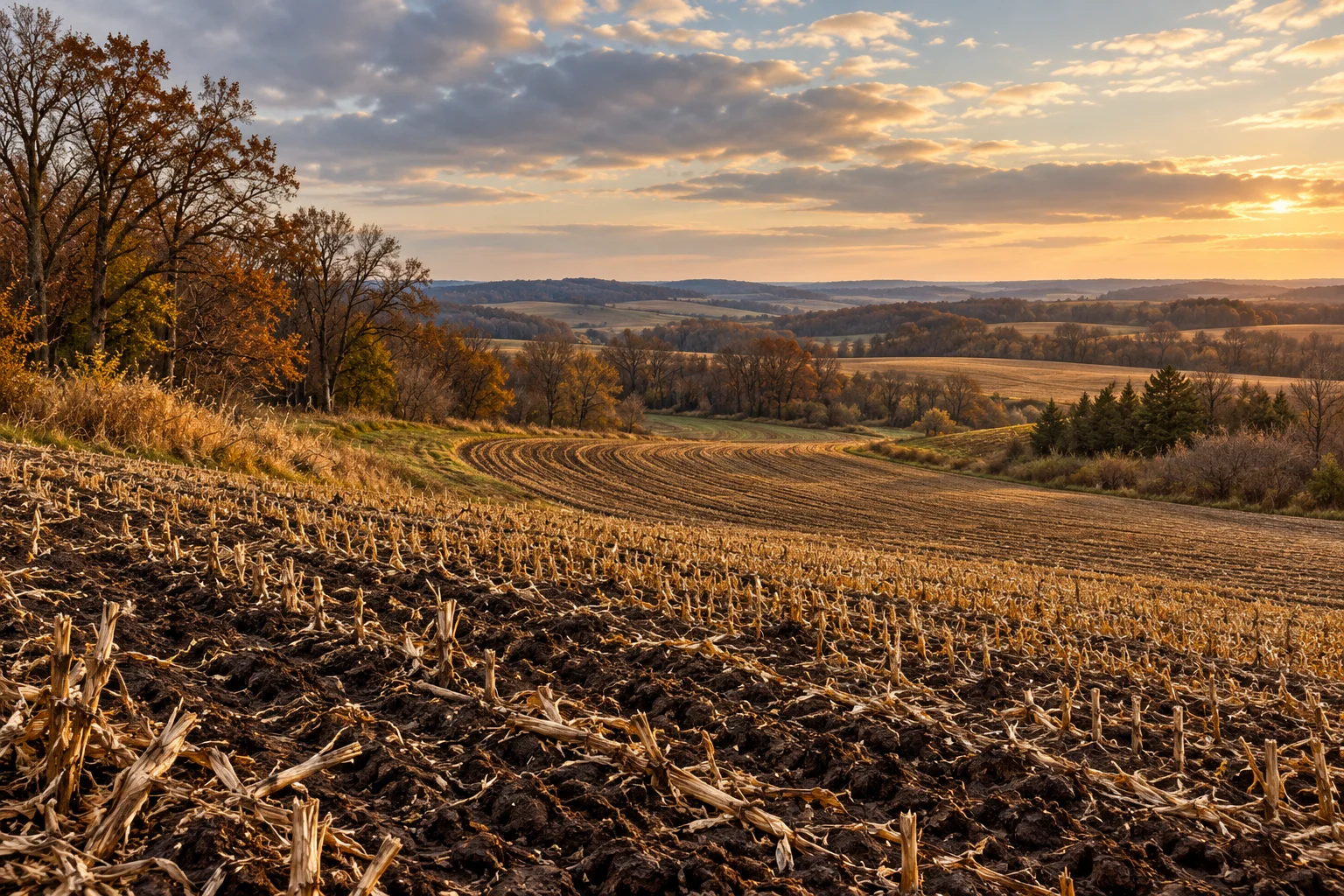
A DETAIL WORTH NOTICING
The shape of the work.
Notice the contours, the edges and the route through the field. Start with how a place is worked, then give the acreage figure its context.
Read a field ↗An illustrated exploration of landscape themes, with no specific parcel or boundary depicted.
Begin with what draws your eye
A landscape can be read at different speeds. The broad view gives a sense of form and connection. A slower look makes room for the field edge, the change in ground, the route from yard to crop and the evidence that would help explain them. Move between the two rather than expecting one image to tell the whole story.
Give the detail a context
Pick a theme above, read its feature and write down one observation you could make on a visit. Add a question you would ask the person who knows the land, then identify the document or record that could support an answer. These are three different kinds of information; keeping them separate is the beginning of a useful land file.
Carry the question into the field
Our field journal gives each part of that process a place. For provincial mapping resources and the limits of regional information, start with the reading room. An illustration can invite a closer look; records and qualified assessments are how a particular parcel is understood.