LAND STUDY / Farmyards & buildings
The yard deserves a second reading
Buildings, service routes and maintenance records tell a connected story. Begin with the yard as a working place, then give each structure its own file.
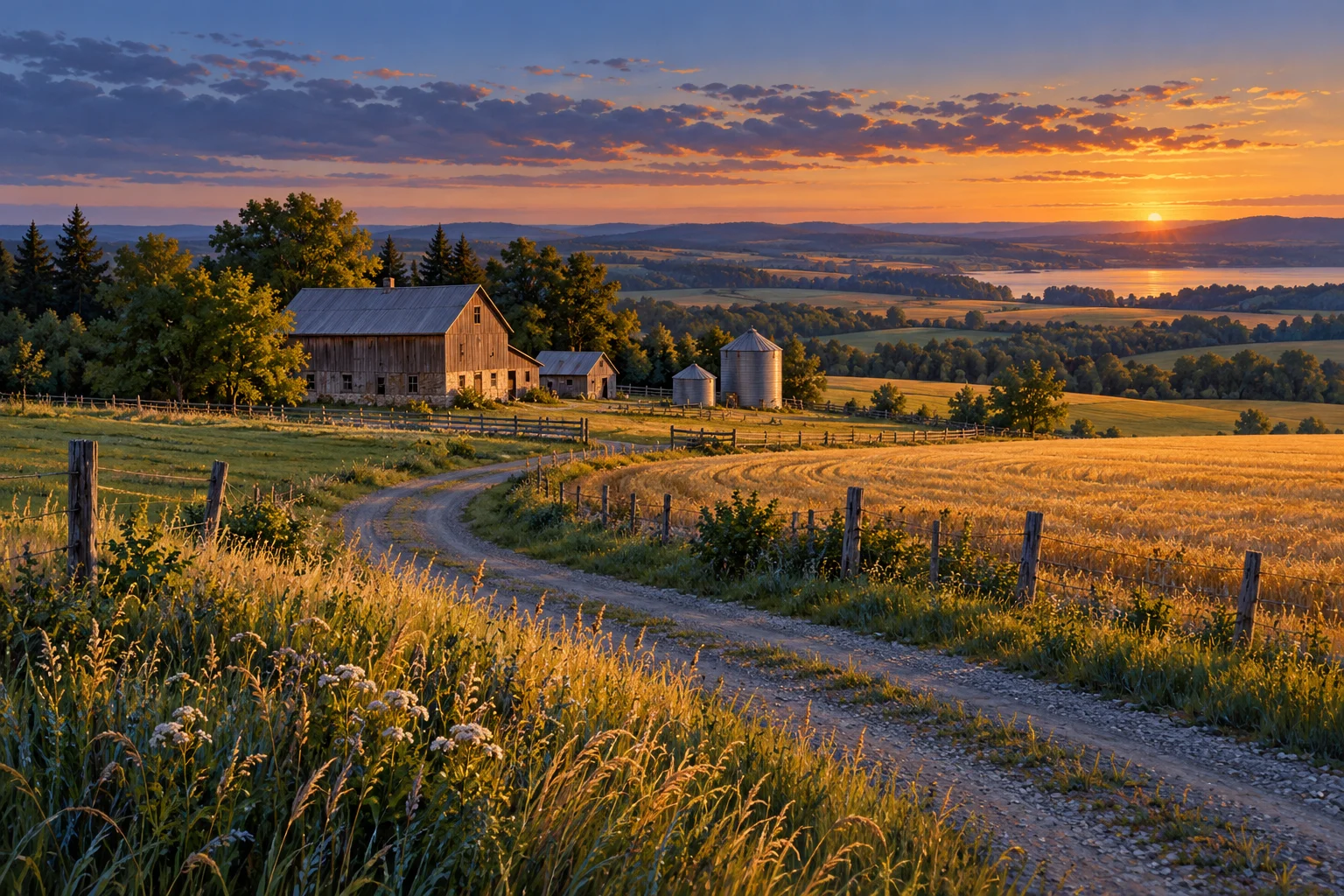
Read the yard as a working place
A farmyard can dominate the first impression of a property. A roofline, a row of doors or an old sheltering grove makes an immediate picture. Its more useful story sits in the relationship between those elements: where work arrives, where it is stored, how people move and what care has been recorded. Read the yard once as a whole, then return to its individual buildings.
Start with a plan, not a verdict
Make a simple yard plan identifying the structures as they are described in the available records. Add doors, known service routes and the movements the proposed use would require. Label uncertainty rather than guessing at a building's purpose, age or construction from its appearance.
For each structure, begin a page with the same headings: documented use, dimensions and source, services, known alterations, available inspection information and maintenance history. Put photographs in date order. A collection of attractive images becomes more useful when a reader can understand what each one establishes.
Follow the maintenance record
Ask what has been checked, repaired or replaced and who performed the work. A useful entry contains a date, a description and the original report or invoice where the owner can provide it appropriately. Distinguish routine care from a professional assessment of condition. One cannot quietly substitute for the other.
Water management is a practical place to focus questions. The Canadian Conservation Institute's guidance for heritage institutions identifies roof leaks, blocked eavestroughs and poor drainage among building-maintenance concerns. Although written for collections and historic facilities, its emphasis on scheduled inspection offers a useful prompt for organizing questions about an older farm building.
The question sheet might ask for roof-work records, the history of water entry and existing reports about the building envelope. Observation should take place from safe, permitted locations. Accessing roofs or uncertain structures belongs with the people equipped and qualified to do it.
Make room for the building's history
An older structure may have value beyond its immediate storage use. Seek dated photographs, plans and reliable accounts before writing that history. Describe what is documented. An appealing architectural detail does not supply a construction date, and an old building is not automatically a formally recognized heritage place.
Canada's conservation standards describe a sequence of understanding a historic place, planning for its conservation and then intervening. That order is a strong editorial principle too: learn what is there before presenting a transformation as the obvious next chapter. Where heritage recognition or protections apply, establish their actual scope.
Finish by bringing the pages back to the yard plan. Which buildings fit the intended work? Which questions need a structural, electrical, environmental or other specialist? Which records are missing? A substantial farmyard story can acknowledge beauty, working usefulness and unanswered questions on the same page. That is a more durable kind of appeal than a promise of effortless potential.
Take these questions with you
- What is documented about each building and its present use?
- Which repairs, alterations and maintenance activities have dated records?
- How do service routes and working movements connect the structures?
- Which condition or heritage questions need qualified review?
Open the private comparison worksheet →
Keep exploring
Take the field journal with you →
Sources and further reading
An original editorial explainer with representative illustrations. No particular parcel is offered or assessed.